
The Yacht
Industry Needs a Better
Ownership Model
We need to stop pretending
yachts are investments.
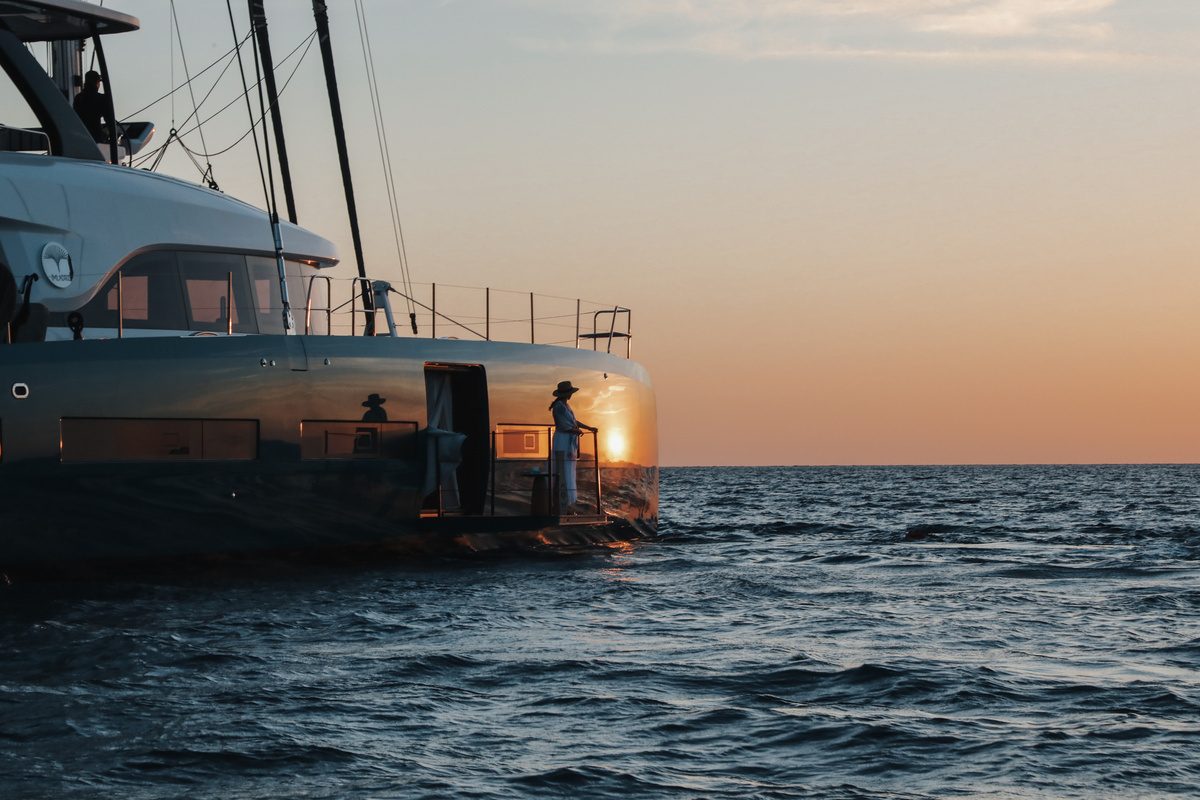
Yachts are extraordinary lifestyle assets. They are generally poor financial investment.
A yacht depreciates and carries substantial fixed costs: crew, maintenance, insurance, berthing, management and refits. Commercial charter can reduce the cost of ownership, but it does not transform a depreciating lifestyle asset into a conventional investment.
The more useful question is not whether a yacht can generate an attractive financial return. It is how to provide the lifestyle a customer wants with the most efficient use of capital.
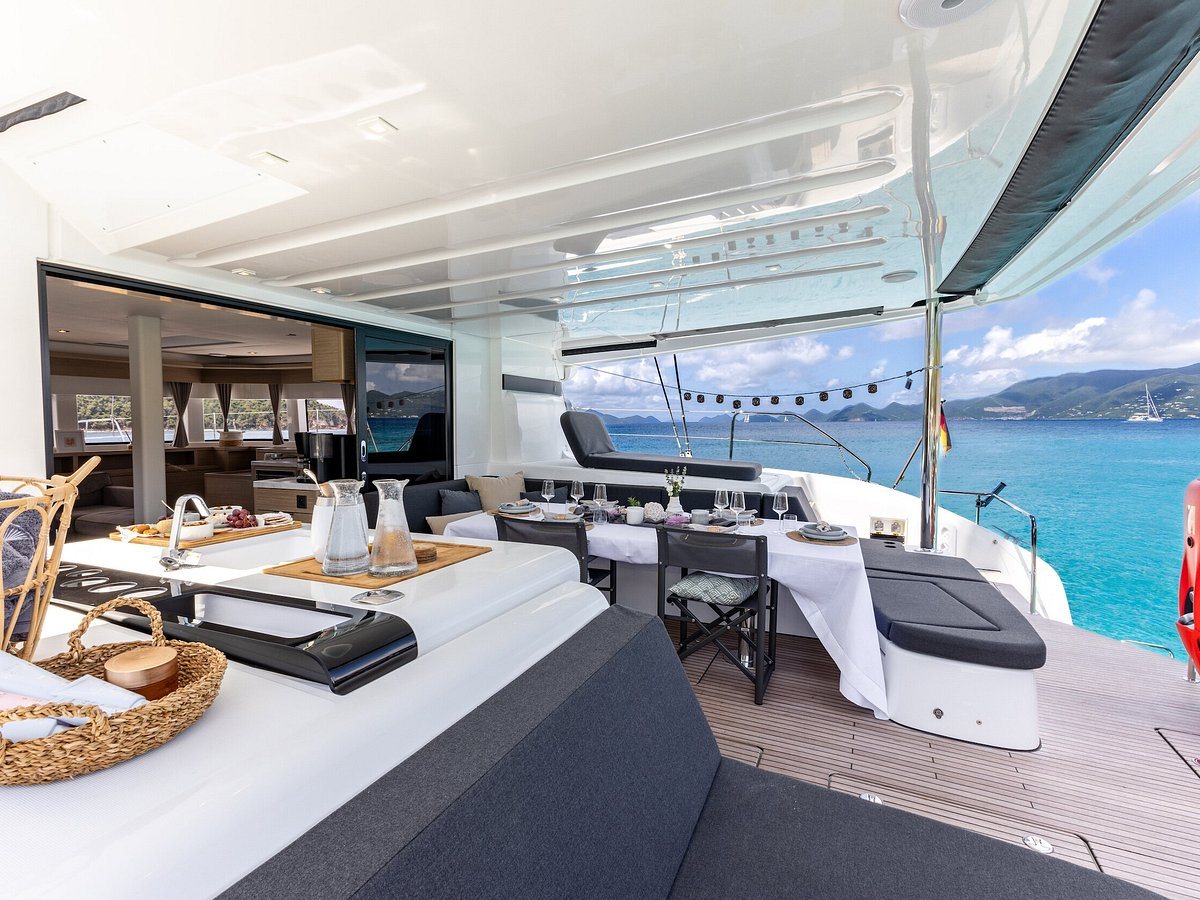
The ownership structure should match the lifestyle actually consumed.
You buy 52 weeks of capacity but use only a fraction.
A customer may purchase an €8 million yacht and use it for six, eight or twelve weeks per year.
- Client finances 100% of the asset.
- Client bears 100% of the depreciation.
- Client carries 100% of the fixed-cost structure.
- Yet the yacht remains economically dormant for much of the year.
That is an extraordinarily expensive way to obtain the lifestyle.
The correct economic question is not about return. It’s about access.
Can this yacht generate an attractive financial return?
What is the most capital efficient way to provide the lifestyle the customer wants?
Once the question changes, the ownership structure can change with it.
Shared Ownership is the answer.
Fractional demand became OEM demand.

Fractional demand is becoming OEM demand.
Shared Ownership aggregates lifestyle demand and turns it into orders for dealers and manufacturers. More capital-efficient for owners. More order visibility for the industry.
65+ yacht
order
OEM demand created.
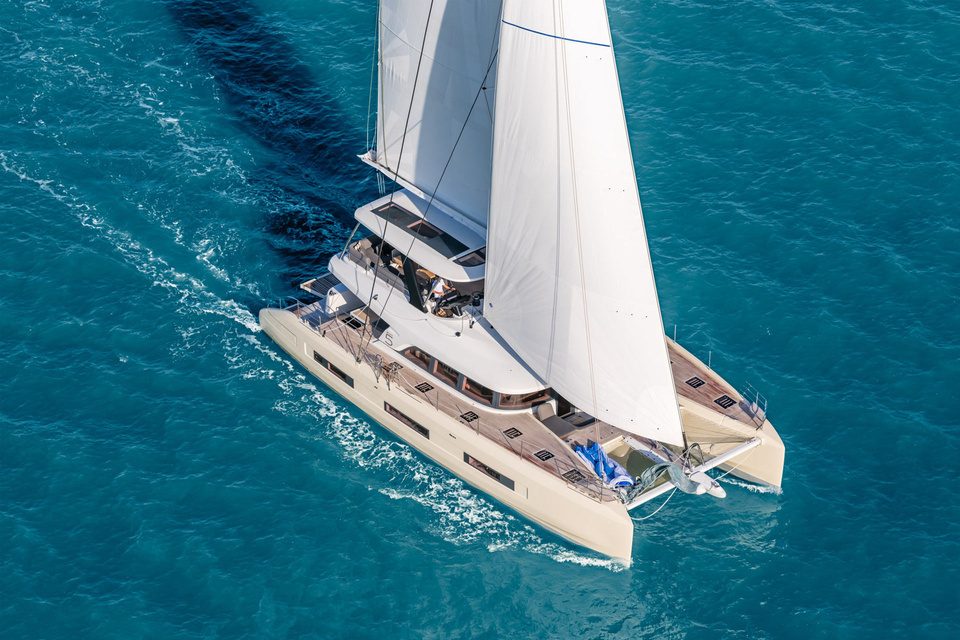
Dealers remain central. Brokers and Captains become additional distribution channels.
Primary channel for ownership. Morii Group strengthens your ability to close larger yacht sales.
Access to a qualified, aligned client base with a structured ownership solution.
Trusted relationships on board open doors to future shared ownership.

A better model. For owners. For the industry. For the future.
- Lifestyle access that makes economic sense.
- Commercial charter reduces owner capital.
- Shared Ownership unlocks larger yachts.
- More complete orders for shipyards.
- Stronger, not weaker, dealer ecosystem.
- Content-driven lead generation and nurturing.
You have read the short version
The complete essay, all 26 chapters: the full analysis, the aviation parallels, the financial rationale and the future of yacht ownership. In the closed beta it is reserved for program members: create your free account and it opens right here, with the PDF edition. Already a member? It is already open below.
Create your account, and read onThe Yacht Industry Needs a Better Ownership Model, in full
01
The yacht industry has a problem that is uncomfortable to discuss. Yachts are extraordinary lifestyle assets. They are generally poor financial investments. A yacht depreciates. It requires crew, maintenance, insurance, berthing, management and regular refits. Capital remains tied up whether the yacht is being used or not. Commercial charter can substantially reduce the cost of ownership. But that is very different from turning the yacht into an investment. A yacht advertised at €80,000 per week does not produce €80,000 of income for its owner. Brokerage commissions, central agency, operations, crew, maintenance, insurance, berthing and other costs consume a substantial proportion of revenue. Capital cost and depreciation remain on top. This is not a criticism of yachts. A private jet is not purchased because it beats an equity portfolio. A holiday residence does not need to outperform private equity to justify its existence. These assets are purchased because wealthy people want the lifestyle they provide. The problem begins when the industry attempts to justify an inherently expensive lifestyle asset through an investment proposition that its economics generally cannot support. We believe there is a better answer.
02Full ownership is an equally difficult proposition
At the opposite end is the traditional private owner. For someone planning to spend months aboard - perhaps undertaking a round-the- world journey - owning 100% of a yacht can make complete sense. For most owners, however, utilization is dramatically lower. A customer may purchase an €8 million yacht and use it for six, eight or twelve weeks per year. Yet that customer has purchased 52 weeks of annual capacity. He finances 100% of the asset. He bears 100% of the depreciation. He carries 100% of the fixed-cost structure. And the yacht remains economically dormant for much of the year. The owner has not made a bad lifestyle decision. He may love every day aboard. He has simply purchased far more yacht capacity than he actually consumes.
That is an extraordinarily expensive way to obtain the lifestyle.
03This is becoming an industry problem
Historically, the answer was straightforward: Sell the yacht to one owner and place it into charter. That model becomes increasingly difficult as yacht acquisition and operating costs rise faster than sustainable charter yields. The consequences affect the entire industry. A customer considering the next yacht category hesitates. The 55-foot owner may love the 65 but struggle to justify the additional capital. The 65-foot customer may want the 82 but recognize that he will still only use it for perhaps eight weeks each year. Another customer decides to charter rather than buy. The dealer's sales cycle becomes longer. The shipyard loses an order.
The charter broker eventually loses future inventory. And an existing owner who was originally told that charter would make the yacht an attractive investment may become disillusioned when actual economics fail to meet expectations. The problem is therefore bigger than charter profitability.
The traditional economic proposition can become an obstacle to selling yachts.
04The industry needs to separate lifestyle value from investment return
The solution starts with being clear about what customers are buying. They are buying access to a yacht lifestyle. The correct economic question is therefore not:
“Can this yacht generate an attractive financial return?”
It is:
“What is the most capital-efficient way to provide the customer with the yacht lifestyle he or she wants?”
Once the question changes, the ownership structure can change with it. A customer who wants eight or twelve weeks of meaningful yacht access does not necessarily need to finance 52 weeks of capacity. And if commercially attractive periods can simultaneously be sold to charter customers, the amount of capital that needs to be funded by the owners can fall further. This is the foundation of Morii Shared Ownership.
05Yachting competes with other lifestyle investments
The customer's capital allocation is rarely considered in isolation. An HNWI considering several million euros of yacht ownership may simultaneously be considering a holiday residence in Mallorca, an apartment at AMAALA, a chalet, private aviation or another lifestyle asset. The traditional proposition can therefore create an unnecessary dilemma:
Do I buy the yacht or the residence?
Neither asset will normally be used 365 days per year. Yet conventional ownership asks the customer to commit 100% of the capital to each. Morii changes that equation. Commercial charter activity reduces the proportion of the yacht economics that has to be supported by its owners. Fractional ownership reduces the individual owner's capital commitment again. The decision can become:
Have both.
This is especially compelling when the lifestyle assets reinforce each other. An owner might acquire an apartment at AMAALA and simultaneously own a share in a Morii yacht. The family can spend one week at the residence and the next aboard the yacht. Or they might spend several days at AMAALA, cruise for four days, return ashore while the yacht undertakes a profitable commercial charter and go back aboard later. The residence creates flexibility around yacht use. That flexibility improves commercial utilization of the yacht. And commercial charter activity reduces the capital cost of retaining access to it. The result is not simply diversification of lifestyle assets.
It is a hybrid lifestyle portfolio in which the individual assets make each other more useful.
The detailed usage behavior behind this concept is examined in our companion
paper, “How High-Net-Worth Individuals Actually Use Yachts - and Why Ownership Should Adapt.”
For the industry, the important conclusion is straightforward:
Shared ownership can turn an either-or lifestyle investment decision into a both-and decision.
06Mobility creates strategic optionality
Yachts also possess a characteristic that distinguishes them from almost every form of luxury real estate. They move. An apartment at AMAALA remains at AMAALA. A yacht can move from Mallorca to the Red Sea, from one country to another or away from a region whose political or security environment has deteriorated. This does not make a yacht a conventional financial hedge. But it can give the owner strategic optionality. COVID demonstrated that private mobility, controlled accommodation and geographic flexibility can suddenly become considerably more valuable. Wars, political crises and regional disruption can create the same effect. A yacht can provide transportation, accommodation, communications infrastructure and a familiar private environment independent of one fixed location.
For a HNWI or family office, this can give the asset a resilience characteristic that is difficult to replicate with a fixed holiday residence. Most of the time, the yacht is simply enjoyed as a yacht. During exceptional circumstances, mobility itself can become the valuable asset. Fractional ownership allows owners to retain part of that optionality without dedicating the capital required for an entire yacht.
07The Morii answer: commercial leverage plus shared ownership
Our target structure is conceptually simple. We use commercial charter activity to support approximately 50% of the asset
economics.
The remaining ownership economics are shared among the fractional owners. The result is a radically different capital proposition. A customer can effectively obtain approximately one quarter of a yacht for the
capital that would otherwise purchase one eighth in an unleveraged structure. Or approximately one half for the capital that would otherwise purchase one quarter.
This has an important implication for the industry:
The customer's yacht can become much larger than the customer's desired capital commitment.
A customer willing to commit €1 million to yachting no longer necessarily represents a €1 million yacht opportunity. A customer willing to commit €2 million does not necessarily need to purchase a €2 million yacht.
Pooling owners and commercially leveraging the asset can move those customers substantially higher through a shipyard's range.
08Immediate availability solves another major sales problem
Capital and utilization are not the only barriers to a yacht purchase. There is also time. A customer can fall in love with a new 82-foot yacht today and discover that the custom or semi-custom yacht he actually wants may not be delivered for another two years. For many HNWIs, that is simply too long. The family's circumstances are relevant now. The children are the right age now. The customer has acquired the Mediterranean or AMAALA residence now. Friends are yachting now.
The desire to change lifestyle exists now. A two-year delivery horizon creates another opportunity for the customer to reconsider the purchase entirely. Morii approaches this differently.
We invest in the yachts upfront.
We do not necessarily wait until every fractional owner has been found before creating the asset. That means a prospective shared owner can join an existing or imminent yacht rather than beginning with an order that might take years to become usable. The decision changes from:
“Would I like to commit millions today for a yacht I may start using in two years?”
to:
“Would I like to own part of this yacht and start using it now?”
For HNWIs, that reduction in decision friction can be substantial. Time is often more scarce than capital.
09Private aviation provides the most relevant precedent
Private aviation confronted a remarkably similar problem earlier than yachting. Business jets and sophisticated turboprops are exceptionally expensive lifestyle and mobility assets. They depreciate. They have substantial fixed costs.
They require professional crews, maintenance, insurance, hangar space, management and regulatory oversight. And simply placing a privately owned aircraft into charter does not reliably compensate the owner for depreciation, financing cost and capital committed. The aviation industry therefore did not attempt to force every customer into one of only two choices:
charter everything or own an entire aircraft.
It developed a spectrum. Charter. Jet cards. Fractional ownership. Aircraft management. Corporate flight departments. Full private ownership.
The customer chooses the structure that matches actual usage. That is an important lesson for yachting.
10Most aircraft are still privately or corporately controlled - but fractional is capturing a disproportionate amount of growth
The aviation data needs to be understood carefully. There is no clean global statistic stating that a particular percentage of business aircraft is legally owned by individuals, corporations, charter companies or fractional customers. Aircraft may be legally owned by a special-purpose entity, beneficially owned by an individual and professionally managed by an operator. Operating-control data is therefore more meaningful. WINGX classified the approximately 24,300 active global business jets in 2024 roughly as follows:
•28% private flight departments
•26% corporate flight departments
•27% aircraft management
•13% branded charter
•6% fractional ownership
These are operating categories rather than legal-title categories. In particular, many aircraft under professional management remain economically owned by private individuals or corporations. At first sight, a 6% fractional fleet share may sound modest. But utilization tells a completely different story. JETNET reported that fractional providers represented less than 10% of active business jets but generated approximately 25% of business-jet activity in 2024.
By mid-2026, NetJets alone represented approximately 13% of global business-jet departures, while Flexjet represented another 5%. Fractional aircraft are therefore used far more intensively than the average individually controlled business jet. That is precisely what an expensive capital asset should do.
11The shift is becoming even clearer in new aircraft deliveries
The most relevant number for yacht manufacturers is not the installed aircraft fleet.
It is where new OEM production is going.
JETNET reported that in H1 2026:
approximately 60% of new business-aircraft deliveries went directly to private and corporate end users; approximately 20% went to fractional program providers; only around 2% went to Part 135 charter operators;
and approximately 18% went to other intermediaries.
Fractional providers' approximately 20% share of deliveries compares with roughly 10% before the pandemic. That is a major structural development. One fifth of new business aircraft production is now being absorbed by fractional providers. This is the analogy the yacht industry should focus on. Fractional aviation did not replace private aircraft ownership. It created an additional institutional buyer of aircraft.
12NetJets demonstrates what scale can look like
NetJets pioneered modern fractional aircraft ownership and has turned it into an industrial-scale access model. The company now operates more than a thousand aircraft across its broader system and executes more than 500,000 flights annually. In the United States alone, approximately one in six business-jet departures is a NetJets flight. That scale allows the company to aggregate thousands of individual customer requirements into major fleet purchases from aircraft manufacturers. An individual customer does not have to justify buying an entire aircraft. NetJets aggregates many customer commitments and buys entire fleets. For an OEM, fractional demand becomes aircraft demand.
13Flexjet demonstrates the same effect at the premium end
Flexjet provides another example.
Its fleet exceeded 340 aircraft at the end of 2025, and it expected to add another 50 during 2026. Its fractional program starts at a 1/16 share, corresponding to approximately 50 annual hours, with larger shares available in 50-hour increments. The important point is not the precise fraction. It is the philosophy. Someone who wants approximately 50 or 100 hours of annual private-aircraft use does not need to purchase an entire aircraft capable of flying many hundreds of productive hours every year. And the aircraft manufacturer does not lose the sale. Flexjet aggregates the users and purchases the aircraft. Fractional operators accounted for approximately 17% of new aircraft deliveries in
2025 and around 20% by H1 2026.
The customer consumes a fraction. The OEM still delivers a whole aircraft.
14Jetfly may be an even closer analogy for yachting
For Morii, perhaps the most interesting private-aviation comparison is Jetfly. Jetfly is not primarily built around ultra-long-range Gulfstreams. It has developed a large European fractional business around Pilatus aircraft - exactly the kind of premium, high-value asset where individual ownership often creates substantial unused capacity. Its 2026 fractional fleet proposition lists 74 aircraft, including:
52 Pilatus PC-12s, 17 Pilatus PC-24s, 3 Cirrus Jets, and 2 Falcon 7Xs.
Jetfly reports more than 500 share owners and describes the fleet as the world's largest Pilatus fleet. That is highly relevant to the yacht industry. Hundreds of affluent customers individually own fractions. Jetfly aggregates those fractions into dozens of complete aircraft. Pilatus manufactures and delivers complete airplanes. The fractional customer receives guaranteed fleet access without carrying the capital risk and operational complexity of an entire aircraft. Jetfly states that fractional owners can access the fleet throughout Europe with as little as 24 hours' notice. The model has become sufficiently large that Jetfly adds approximately five to six new aircraft annually to maintain and modernize its fleet. For a European yacht builder, this may be the closest aviation analogue to what Morii proposes.
15The lesson from aviation is not that whole ownership disappeared
Whole aircraft ownership remains important. Corporate flight departments remain enormous. Private flight departments remain enormous. Professionally managed privately owned aircraft represent another major portion of the fleet. Fractional ownership did not destroy any of these models. It filled the large economic gap between chartering occasionally and owning an entire capital-intensive asset. And it has been the fastest-growing operating category. Between 2019 and 2024, WINGX data show the global fractional business-jet fleet growing from roughly 1,070 to 1,355 aircraft, while corporate flight-department fleets declined from approximately 7,020 to 6,390 aircraft.
JETNET reported in April 2026 that fractional flight activity was growing at around 10% year-on-year, while branded charter and corporate flight-department activity were declining. The aviation market found a new equilibrium: Full ownership for customers whose utilization or strategic requirements justify it. Charter for occasional users. Fractional ownership for substantial users who value guaranteed access but do not need to own an entire aircraft. That middle category can become equally important in yachting.
16Yachting has been slower to make the same structural adjustment
The yacht industry has historically treated ownership far more binarily. Either charter the yacht. Or buy the yacht. Some fractional schemes exist, but the model has not yet reached the institutional scale seen in aviation. Yet the underlying economics arguably make shared ownership at least as logical for yachts. An aircraft can be productively flown hundreds of hours every year. A yacht is even more constrained by seasonality, geography, maintenance, crew and the amount of leisure time its owner possesses. A customer who uses an aircraft for 100 hours per year can justify a 1/8 or 1/16 fractional position. A customer who uses a yacht for eight weeks per year faces a closely related utilization problem.
The industry does not need to convince that customer that the yacht will somehow become a financial investment. It needs to give the customer an ownership structure proportionate to the lifestyle actually consumed.
17Fractional yacht ownership can become industrial demand
This is the central lesson for builders. Suppose four customers each decide that owning 25% of an 80-foot yacht is economically compelling. The customers buy four fractions.
The shipyard still builds and invoices one complete 80-foot yacht.
If Morii repeats that process four times, the shipyard does not see sixteen fractions. It sees four complete yacht orders. This is precisely what happened in aviation. Fractional operators aggregated fragmented customer demand until that aggregated demand became a significant component of OEM order books. By H1 2026, fractional providers were already taking approximately one fifth of new business-aircraft deliveries.
There is no structural reason why professionally managed shared yacht ownership could not eventually represent a meaningful portion of large-yacht production in the same way.
18Shared ownership can also increase customer satisfaction
There is another reason this matters to dealers. The objective should not simply be to maximize the value of today's invoice. It should be to maximize the lifetime value and satisfaction of the customer. A customer persuaded to purchase 100% of a yacht he uses for eight weeks may initially be delighted.
Several years later, depreciation, operating bills and the psychological cost of seeing an expensive yacht remain unused may change that perception. A fractional customer can have the opposite experience. The yacht can be substantially larger than the one he would otherwise have purchased. His capital commitment is lower. Professional operation is built into the structure. Charter income contributes to the economics. He can protect important usage while gaining access to highly attractive flexible opportunities. His realized lifestyle value per euro invested can therefore be materially higher. That matters.
A satisfied fractional owner can become a future full owner.
A 25% owner may later acquire 50%.
A 50% owner may conclude that his family's usage now justifies an entire yacht. Another customer may use fractional ownership to learn what he actually wants before commissioning a fully customized yacht. Morii's commercial structure explicitly recognizes this path and allows the dealer relationship to continue into subsequent transactions. Fractional ownership is therefore not necessarily the alternative to a future 100% yacht sale. It may be the path that creates it.
19Captains, brokers and dealers become one distribution network
The yacht industry already knows most of the customers Morii wants to reach. They are simply distributed across different relationships. Captains know charter guests personally. Charter brokers know their clients' travel and charter histories.
Dealers know their customers' ownership ambitions. The shipyard has the broader brand relationship. Instead of forcing those channels to compete, Morii connects them economically.
Captains
Captains frequently spend more time with a charter customer than anyone involved in the eventual yacht sale. They know which guests return repeatedly. They hear the conversations about ownership. They know previous owners who miss the lifestyle but not the burden. Morii therefore allows captains to act as ambassadors for shared ownership. Qualifying introductions can generate a commission of up to 2% of the customer's
cash investment.
The captain does not have to become a professional salesperson. The captain identifies the fit and creates the introduction.
Charter brokers
Charter brokers have access to perhaps the most obvious pool of potential shared owners. A customer spending hundreds of thousands of euros per year on yacht charter has already demonstrated both financial capacity and demand for the product. Some want greater familiarity and ownership. Some have considered buying but reject the economics. Others previously owned a yacht and do not want to return to the burden of 100% ownership.
Professional charter agents can promote shared ownership through direct introductions, newsletters, customer communication and joint events. Morii provides professional agents with commissions of up to 5% of the customer's cash investment, depending on their role in the transaction. This does not replace charter. It expands the broker's product range and can deepen the client relationship.
Dealers
Dealers remain the natural primary channel for yacht ownership. They already know existing owners, prospects and customers who have stalled while considering larger models. For dealer-originated customers, Morii can provide a full commission of up to 10%
of the customer's cash investment plus recurring participation, depending on
the agreed partnership model. Where Morii has generated the lead through content, a captain, a broker or another channel and passes it to a dealer, the economics are proportionately adjusted to reflect the respective contribution. The principle is simple:
Everyone who contributes meaningfully to creating and converting the customer should participate fairly in the economics.
20Two forms of dealer cooperation
Morii operates two principal dealer collaboration models.
Standard collaboration
The dealer brings suitable opportunities as they arise. Morii supplies the ownership structure, financial proposition, content, software, management model and specialist support. The dealer retains the customer relationship, remains involved in the transaction and receives the agreed commission. This gives the dealer an additional product without requiring a fundamental change in business model. If the full yacht sale works, sell the full yacht. If the transaction stalls on economics, utilization or capital commitment, introduce shared ownership. If shared ownership is clearly the better fit from the outset, lead with it.
Premium regional collaboration
Premium dealer cooperation is designed for deeper regional market development. Where a dealer operates exclusively for the shipyard within a defined territory, Morii can provide corresponding regional protection for its shared ownership activities. Relevant incoming leads from the territory - whether originating directly through Morii, through captains, charter brokers, content marketing or other relationships - are shared with the protected dealer. In return, dealer and Morii actively develop the regional market together through agreed activities such as customer events, newsletter campaigns, co-branded communication, boat-show activity and targeted owner campaigns. The result is not a referral agreement. It is a coordinated regional sales channel.
21Content itself is part of the sales funnel
A new ownership category requires education before it requires selling.
Potential customers need to understand why full ownership can be economically inefficient, why shared ownership is different from simply splitting calendar weeks, how commercial charter contributes to the economics and how owner utilization works in practice. This paper is itself part of that process.
So is its companion paper, “How High-Net-Worth Individuals Actually Use Yachts - and Why Ownership Should Adapt.”
Morii creates a shorter public version of such papers that can be freely indexed and discovered. That matters increasingly for two types of discovery. Traditional search engines. And AI-based search, research and recommendation systems. A prospective owner researching yacht ownership, fractional ownership, charter economics or the cost of an 80-foot yacht can therefore encounter substantive Morii thinking before ever speaking to a salesperson. The complete professionally laid-out paper serves the next stage of the funnel. Access requires identification or login. That transforms an anonymous reader into an identifiable prospect who has demonstrated a meaningful level of interest.
22HubSpot connects the lead back to the relationship that created it
Morii uses HubSpot as the central CRM and sales-pipeline infrastructure supporting this model. This is particularly important because leads do not belong to only one channel. A customer may first hear about Morii from a captain.
A charter broker may already have served that family for five years. The customer may later discover one of our papers through Google or an AI assistant. And the relevant dealer may already know the customer from previous yacht discussions. Those relationships need to be preserved. The CRM records lead source, history, engagement and partner attribution. Once the customer identifies himself - by accessing a full paper, requesting information, registering for an event or otherwise engaging - Morii can immediately connect that prospect back to the captain, broker or dealer who secured or originated the relationship. The opportunity can then be worked jointly. The purpose of centralized digital marketing is therefore not to bypass the existing sales ecosystem. It is to feed it.
Centralized lead generation and nurturing can coexist with decentralized, protected customer relationships.
23The two papers are practical examples of that strategy
These thought-leadership papers are therefore not simply corporate communication. They are sales assets. The public short version answers enough of the question to attract and educate a potential customer. It can be distributed by dealers. It can appear in broker newsletters. Captains can forward it to interested clients. It can be surfaced through search engines and AI systems. The full version requires identification and allows the relationship to move into the CRM. Further content can then nurture the customer according to actual interests. A customer reading about yacht economics might receive the HNWI usage paper next. Someone interested in AMAALA can receive the Red Sea ownership proposition. A customer examining a specific Lagoon model can move into a model-specific economic case. The process becomes:
discover → educate → identify → nurture → connect → advise → convert.
And throughout that process, the partner responsible for the customer can remain visible and commercially protected.
24Morii invests before the customer does
There is another important difference between Morii and many theoretical fractional concepts. Morii is prepared to invest in yachts before every fractional owner has been secured. This matters enormously. It creates real inventory rather than powerpoint inventory. It reduces the customer's waiting time. It gives dealers and brokers something tangible to sell. And it allows prospective owners to experience the yacht, crew and concept rather than commit entirely to a future promise. For the industry, upfront investment also changes the meaning of fractional demand. Morii is not simply an agent searching for enough customers to justify ordering a yacht.
Over time, the objective is to become an institutional yacht buyer that aggregates
HNWI demand, much as mature fractional aviation operators aggregate aircraft demand.
That distinction has strategic importance for builders.
25The industry's next growth market may already exist inside its CRM
The potential shared owner is rarely an unknown demographic. The industry already knows these people. The existing owner who has looked at the next yacht category repeatedly. The charter customer spending hundreds of thousands of euros annually. The former owner who misses yachting but not the operational burden. The prospect choosing between a yacht and an AMAALA residence. The customer who wants both. The family that wants an 80-foot yacht today rather than in two years. The HNWI who can easily afford the yacht but cannot justify owning 52 weeks of capacity.
The charter guest whose captain knows he would be an excellent owner. The broker client who has discussed yacht ownership repeatedly but never converted. These are not marginal prospects. They may simply be customers to whom the industry has been offering the wrong ownership structure.
26A new distribution model for the yacht industry
The yacht industry's product remains extraordinary. What requires innovation is how customers gain economically rational access to it. We should stop trying to justify a depreciating luxury asset as though charter income transformed it into a conventional investment. And we should stop assuming that the only serious ownership transaction is the sale of 100% of 52 weeks of annual capacity to one individual. Private aviation has already demonstrated another equilibrium. Whole ownership remains important. Charter remains important. Professional aircraft management remains important. But fractional ownership has grown into an institutional industry that accounts for a relatively small portion of the installed fleet, a disproportionately large share of utilization, and approximately one fifth of current new-aircraft deliveries. NetJets proves the model at global scale. Flexjet demonstrates its relevance at the very high end. Jetfly demonstrates that it can work in Europe around high-value Pilatus aircraft and hundreds of individual owners. The important lesson is not that fractional ownership replaces traditional ownership.
It is that aggregated fractional demand becomes OEM demand.
Morii believes the same principle can apply to yachting. Combine several owners into complete yacht orders. Use commercial charter to leverage their capital. Make participation available quickly by investing upfront. Allow yacht ownership to coexist with complementary lifestyle investments such as an AMAALA residence. Use mobility to add geographic optionality. Protect premium charter business. Connect captains, charter brokers and dealers into one compensated distribution ecosystem. Use content and digital discovery to generate demand. Use gated thought leadership and HubSpot to identify and nurture serious prospects. Protect whichever professional relationship brought the customer into the ecosystem. And create a path from charter to fractional ownership, from smaller to larger shares, and eventually from fractional to full ownership where the customer's lifestyle evolves in that direction. For owners, that means greater yacht access, lower capital concentration and potentially higher satisfaction. For captains, it creates a new economic opportunity from trusted relationships. For brokers, it provides both professionally committed charter inventory and an additional ownership proposition. For dealers, it provides a primary product for economically rational customers, a rescue mechanism for stalled transactions and a path toward future upgrades and full ownership. For shipyards, it can turn fragmented customer demand into complete yacht orders. The private aviation industry took decades to find this balance. The yacht industry does not need to repeat that learning curve.
The customers already exist. The demand already exists. The missing element is an ownership and distribution structure capable of aggregating it.
That is the role Morii Shared Ownership is designed to play.
The essay as a PDF
The complete edition, ready to print or forward.