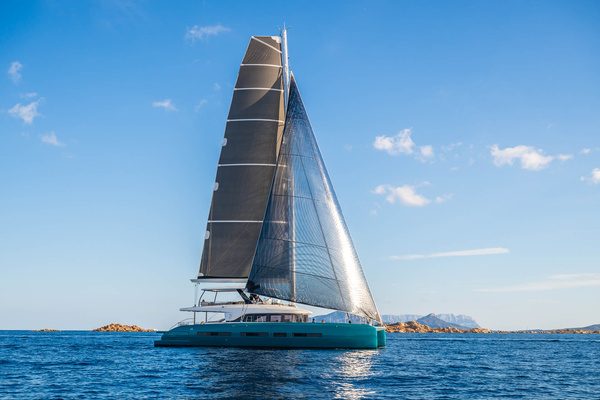
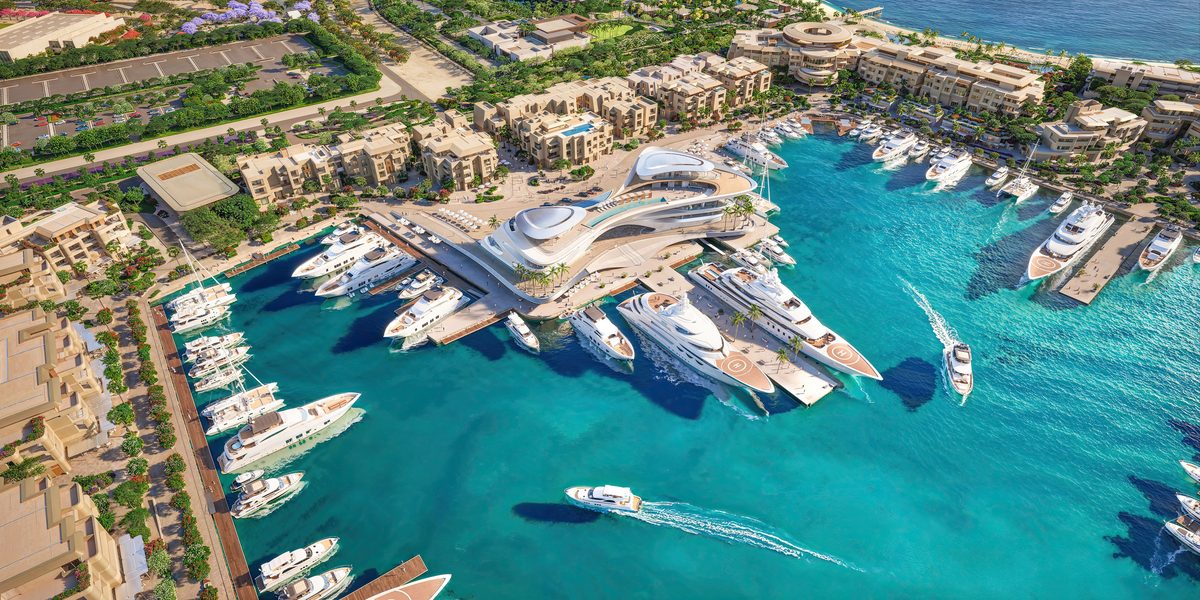
A yacht is a twelve-month asset, but the Mediterranean season only uses part of the year. Traditionally, the answer has been the Caribbean. Today, Saudi Arabia offers another option: a shorter repositioning, no Atlantic crossing, exceptional diving, new ultra-luxury hospitality and substantially more space for owner use. The Caribbean remains compelling. It just no longer needs to be the default every winter.
01The empty half of the year
The Mediterranean season is short and everyone knows it. What is discussed less often is what the other half of the year does to a yacht and to its owners. Winter layup is not free: it consumes berthing, insurance, maintenance and a portion of the crew, and it delivers nothing back.
For an owner who only sails in summer this is simply the cost of the pleasure. For anyone thinking about the yacht as an asset, six idle months is the single largest structural inefficiency in the whole model.
02Why the Red Sea, and why now
The Red Sea offers something the alternatives do not: reliable winter conditions, genuinely exceptional diving and marine life, and a coastline that is being developed with deliberate intent rather than by accident. Significant investment is going into the Saudi coast, into marina infrastructure and into the wider destination proposition. The direction of travel is clear even where the timelines are not yet fixed.
For a catamaran program this matters more than it might for a monohull fleet. Shallow draft, stable platforms and generous deck space are precisely what shallow reefs, long anchorages and warm-water diving reward.
You have read the opening
The remaining 4 chapters, and the designed PDF edition to keep and forward, open with the one registration that opens every Morii paper, the live simulation and the whole program. If you registered anywhere on Morii, they are already open below.
Register, and read on03Against the Caribbean, which is the real alternative
Most people weighing a winter season are not choosing between the Red Sea and nothing. They are choosing between the Red Sea and the Caribbean, and the two are further apart than the brochures suggest.
Start with getting there. The Atlantic crossing is a six to seven week undertaking for the yacht, in conditions that are hard on her: long ocean swell, sustained loads, salt everywhere. Repositioning to the Red Sea takes about two weeks, in gentle winds and short seas, and the boat arrives having been sailed rather than beaten. Over a seven-year ownership cycle that difference shows up in the refit budget.
Then the season itself. The Caribbean has a hurricane season and the insurance to match. The Red Sea does not.
Both offer diving at the highest level, and on the Saudi coast the reefs are in better condition than most of what the Caribbean has left, because almost nobody has been on them. The landscape is a matter of taste rather than fact: the Caribbean is lush and green, the Saudi coast is cinematic in a way that photographs badly and reads unforgettably in person. Ashore, the gap is wider. Saudi Arabia has built genuine high-end hospitality; much of the Caribbean charter circuit still runs on mediocre restaurants and thin land-side experiences.
Getting your guests there matters too. Five hours from Zurich, Milan, Paris, London, Munich or Moscow, direct, on Beond. Compare that with the connections and the stopovers it takes to reach the BVI from most of Europe.
And there is a commercial point that cuts the owner’s way. The Caribbean is a mature charter market: the weeks fill, which is good for revenue and bad for anyone hoping to use their own yacht in February. The Red Sea is newer, with moderate charter demand, which leaves more of the season open for the people who own her.
04What a second season actually costs to run
It is easy to describe a dual-season program and hard to operate one. The honest list of what it requires: repositioning passages planned around weather windows rather than the calendar; crew rotation that does not quietly burn out a team over twelve continuous months; a maintenance schedule split across two windows instead of one long winter; local compliance, agency and customs handling in each region; spares and technical support in two places; and insurance that properly covers both cruising areas.
None of this is exotic, but all of it is work. A program that treats the second season as a marketing line rather than an operational commitment will discover the difference in its first repositioning.
05What it changes for an owner
Two things. The first is arithmetic: a yacht that works in two seasons has a longer earning year against the same standing costs, which is what makes owner use affordable rather than merely cheaper.
The second is less measurable and, for most owners, more persuasive. Two seasons means two genuinely different kinds of sailing on one asset. Croatia or the Balearics in July and the Red Sea in February are not variations on a theme; they are separate holidays, separate landscapes and separate reasons to go. An owner who would have used a Mediterranean yacht for two weeks may quite reasonably use a dual-season yacht for five.
06What we would caution against
Enthusiasm about a developing destination should not be confused with certainty about it. Infrastructure timelines move. Regulation in a young market evolves, sometimes quickly. Regional events can affect access and routing in ways no operator controls, and any program that depends on a single destination is exposed.
Our own view is that the Red Sea is a strong second season and not a substitute for a first one. The model works because there are two regions, not because one of them is new.
The paper as a PDF
Same text, designed for printing and forwarding. It opens with the one registration that opens the whole Morii program.