
The Red Sea as
a Second Season
Why a serious yacht program
needs a winter season - and why
the Caribbean
should no longer be the automatic answer
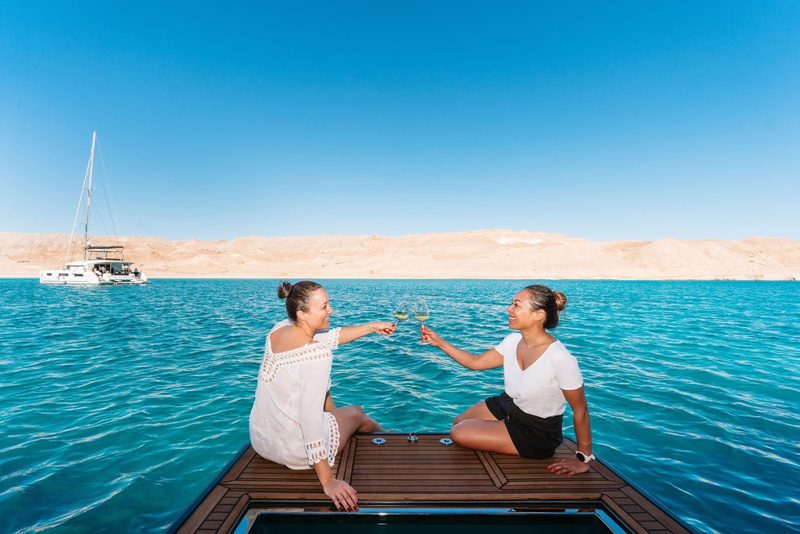
The Mediterranean season is short. The costs are not.
The Mediterranean yacht season is short. The costs of owning and operating the yacht are not.
Insurance, financing, maintenance, management and crew continue throughout winter. A yacht that spends five months actively cruising and much of the remaining year in layup therefore carries twelve months of cost against a much shorter period of meaningful use.
A serious second season addresses this structural inefficiency. It creates more opportunities for commercial revenue, but equally importantly, more opportunities for owners to use the yacht.
For decades, the traditional solution has been the Caribbean. It remains one of the world’s great winter yachting regions, with mature charter demand, beautiful islands and established infrastructure. But reaching it from the Mediterranean requires an Atlantic migration in autumn and another in spring.
Saudi Arabia changes that geography.
A Western Mediterranean yacht can reach the Saudi Red Sea in approximately two weeks rather than committing to the much longer overall positioning cycle associated with a Caribbean season. There is no Atlantic crossing, considerably less blue-water exposure and less unnecessary wear before the yacht returns to its commercially important Mediterranean summer.
The passage can also become part of the experience. Routes can incorporate the Aeolian Islands, Malta, Crete, Egypt and the Suez Canal before entering the Red Sea. Selected owners can therefore turn what would otherwise be repositioning time into an expedition.
The Caribbean is established. Saudi Arabia is almost cinematic.
The Caribbean and Saudi Arabia offer very different experiences.
The Caribbean is lush, tropical and established. Saudi Arabia is desert, mountains, reefs and largely undeveloped coastline. Its landscapes can feel almost cinematic, while much of the cruising territory remains unfamiliar even to experienced yacht owners.
Both offer world-class diving. The Saudi Red Sea adds remoteness and novelty. Morii yachts from 65 feet upwards carry a dive compressor and full diving equipment, allowing the yacht to operate as an independent dive base rather than relying on shore facilities.
The same applies ashore. The yacht can establish a private beach setup on suitable secluded sandy islands, creating a completely private day around the yacht, tenders, watersports and diving.
This is not simply another resort destination.
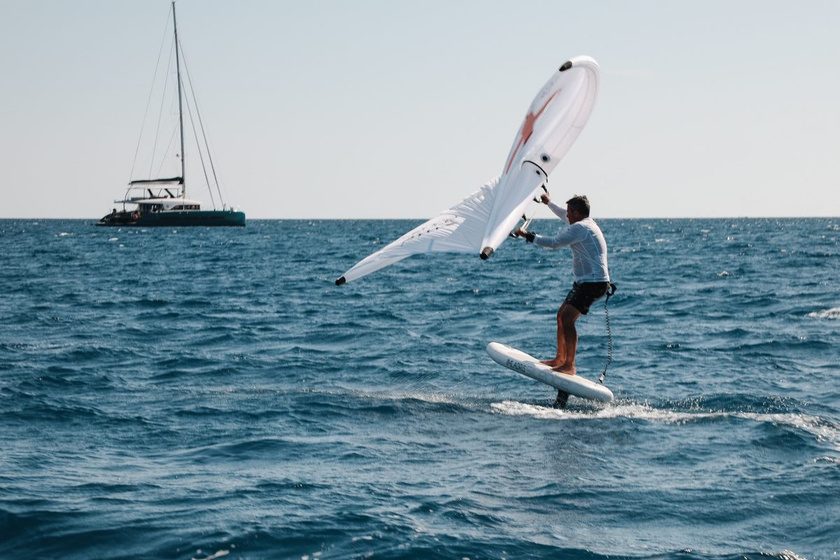
Not high-volume tourism. Scarcity, low density, luxury hospitality.
Egypt proved decades ago that Red Sea winter tourism works. The climate, diving and European accessibility are well established.
Saudi Arabia is developing a different proposition. Rather than high-volume resort tourism, destinations such as AMAALA, Shebara and Desert Rock are deliberately positioned around scarcity, low density and international luxury hospitality.
That creates a much stronger fit with yacht ownership. Guests can combine several days aboard with an ultra-luxury resort, AlUla and Hegra, Jeddah, Medina or desert experiences. The yacht becomes part of a broader Saudi journey rather than the only reason to visit.
Broader than conventional weekly charter.
The commercial opportunity is also broader than conventional weekly charter. Morii sees three complementary sources of demand.
Ultra-luxury hotels create a natural market for private day charter. Guests already staying in the destination can add a day aboard a large crewed yacht without committing to a full week, and Morii has established partnerships designed around this type of demand.
The second opportunity is multi-day yacht experiences combined with hotels and residences. A guest might spend three nights aboard, several nights at an ultra-luxury resort and then continue inland.
The third remains the traditional international market: weekly or multi-week charter under MYBA contracts, sold through international brokers. Saudi demand is still developing, but the long-term potential is substantial as the destination gains international recognition.
The remaining capacity can be used by the owners. And this is where an emerging market can actually be advantageous.
Low opportunity cost. High owner value.
A July week in the Mediterranean has high commercial opportunity cost. The same is not necessarily true of a five-day opening in the Saudi winter schedule. Owners can therefore fill gaps much more freely without displacing valuable charter business.
European owners can reach the yacht quickly enough to make a short week practical. Direct Beond connections from cities including Zurich, Milan, Munich, Paris, London and Moscow bring the Red Sea much closer than the Caribbean, while private aviation makes short-notice use even easier.
That creates another interesting shared-ownership opportunity. A mixed group of European and GCC owners may naturally optimize the calendar. European owners can favor more Mediterranean weeks, while Saudi, Emirati and other GCC co-owners use a greater proportion of their time in the Red Sea. Instead of competing for the same weeks, different geographic preferences can improve total yacht utilization.
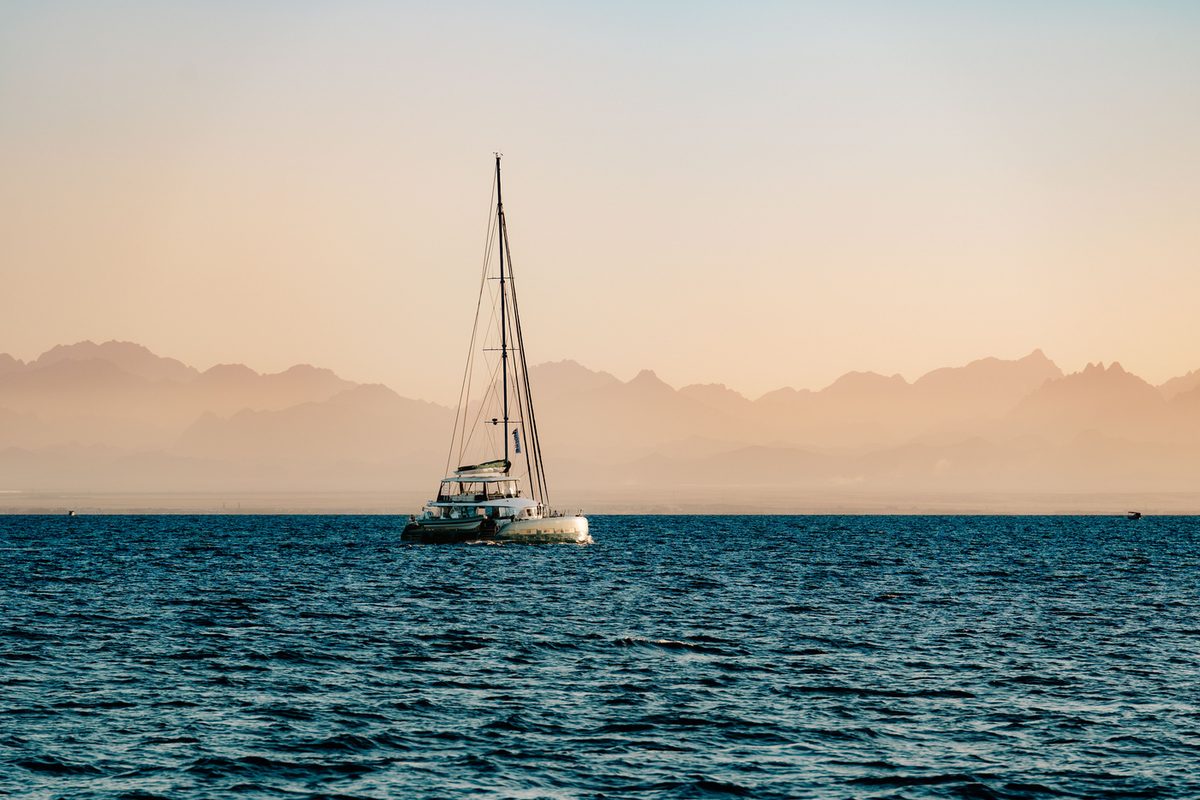
Not simply hotel guests. Sailors who brought their own yacht.
AMAALA Yacht Club adds another dimension. In established Mediterranean destinations, another large yacht attracts little attention. In a new yachting destination, the first owners arriving by sea are part of creating the culture around it.
They arrive not simply as hotel guests, but as sailors and adventurers who have brought their own yacht into a new cruising region. That generates a different kind of interaction with other yacht owners, residents, entrepreneurs, hospitality leaders and early participants in the destination.
There is genuine interest in where the yacht came from, where it is going and what has been discovered along the way. For some owners, those relationships and encounters are part of the attraction.
Still one of the great winters. Just no longer the default.
None of this means abandoning the Caribbean. Morii has strong roots in the BVI and Grenada, and a yacht can rotate there whenever the ownership group wants a different winter.
A possible rhythm could be two Saudi winters followed by a Caribbean season every third year. The precise rotation can follow owner preferences and commercial opportunities. The underlying business model barely changes: charter when valuable, owner use when appropriate, professional management throughout.
The important change is philosophical. A mobile asset does not need to repeat the same migration every year simply because that has traditionally been the industry pattern.
The Caribbean remains one of the world’s great winter yacht destinations. It just no longer needs to be the default.
The Saudi Red Sea offers something different: shorter positioning, less wear, exceptional diving, new high-end hospitality, genuine expedition potential, easy access from Europe and more room for owners to use the yacht. For shared ownership, that combination may be more valuable than simply chasing the deepest charter market every winter.
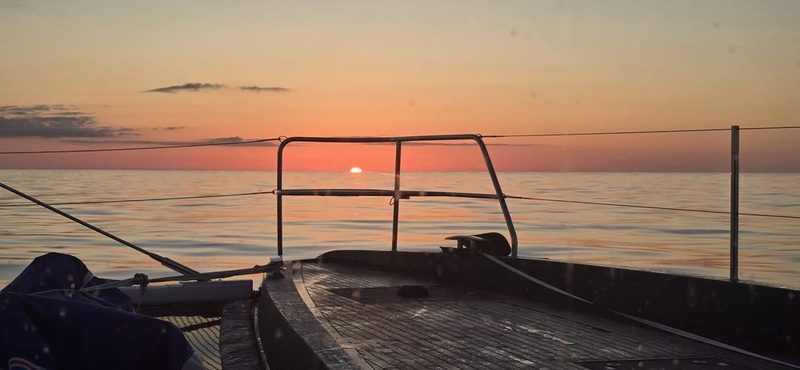
A mobile asset should have a mobile strategy.
- More time in use.
- Less unnecessary repositioning.
- More than traditional charter.
- Greater owner flexibility.
- A different kind of experience.
- The Caribbean remains part of the map.
You have read the short version
The complete essay, all 21 chapters, word for word: the cost of crossing an ocean, the layered charter market, the owners who fill the gaps, the diving and the rotation with the Caribbean. It opens, with the designed PDF edition, through your Morii account; the Morii team reviews every registration personally. If you have an account, it is already open below.
Create your account, and read onThe Red Sea as a Second Season, in full
01From Atlantic crossing to Red Sea cruising
For decades, the seasonal pattern for internationally operated yachts has been straightforward: Mediterranean in summer, Caribbean in winter. There are good reasons for this. The Caribbean has warm winter weather, an established charter market, attractive cruising grounds and a mature network of brokers and clients who understand the product.
For many yachts, it remains an excellent winter destination. But we no longer believe it should be the default choice every year.
The development of the Saudi Red Sea creates a credible alternative, particularly for larger sailing and power catamarans combining commercial charter with substantial owner use. It is much closer to the Mediterranean, requires no Atlantic crossing, offers exceptional diving and expedition cruising, and is developing a very different kind of tourism proposition: lower density, highly controlled and increasingly concentrated around ultra-luxury hospitality.
Most importantly, the Saudi market does not have to replicate the Caribbean charter market to make economic sense. A mixed model of day charter, multi-day experiences, conventional weekly charter and owner use may actually be better suited to a shared yacht.
That is the opportunity we see.
02The problem starts with the empty half of the year
A Mediterranean yacht is expensive twelve months of the year even if it is primarily useful for five or six.
Insurance, financing, depreciation, management and maintenance continue through winter. Crew costs do not simply disappear either, particularly if the objective is to retain a good team rather than recruit and retrain every spring.
A winter layup therefore has a substantial economic cost while creating very little lifestyle value for the owner.
This does not make a yacht an investment, and commercial charter does not magically turn one into a yield-producing asset. But if a yacht is going to carry substantial annual standing costs anyway, there is a strong argument for making it useful for more of the year.
A second season extends the productive life of the yacht. Some of that additional capacity can be sold commercially and some can be enjoyed by owners. Both are preferable to six months of inactivity.
For shared ownership, the effect is even more important because different owners do not necessarily want the same geography at the same time.
03The traditional solution has been the Caribbean
The Caribbean became the natural counterpart to the Mediterranean for entirely rational reasons. It offers reliable winter demand, warm weather, beautiful islands, established charter infrastructure and some of the world's best-known winter yachting destinations.
Its weakness is geography.
The Atlantic lies between the Mediterranean and the Caribbean. Establishing the winter season requires a serious ocean repositioning, followed several months later by another one in the opposite direction.
When positioning to the departure point, preparation, weather windows, the crossing itself and onward positioning are considered, the broader seasonal transition can occupy several weeks. For operational planning, the difference between a Caribbean migration and a Saudi Red Sea migration can be roughly six to seven weeks versus around two.
The distinction becomes more significant when repeated over a seven-year yacht ownership cycle.
04The physical cost of crossing an ocean
There is also a physical consequence that tends to receive less attention than the fuel bill.
Atlantic crossings put substantial hours and miles on the yacht. Machinery operates continuously, equipment is exposed to prolonged offshore conditions, interiors and systems experience ocean motion, and the crew spends long periods on passage rather than preparing the yacht for guests.
Professional yachts cross the Atlantic safely every year. The argument is not that they should not.
The question is whether they need to do so twice every year.
There is also a practical maintenance issue at the other end. Caribbean technical infrastructure varies significantly by island and is generally less comprehensive than the major Mediterranean refit and service hubs. Yachts that have completed a Caribbean season and a return Atlantic crossing can arrive back in the Mediterranean with a considerable technical work list immediately before their commercially most important season.
A Mediterranean–Red Sea program creates a different maintenance rhythm. There is no ocean crossing and the yacht remains much closer to the European technical ecosystem.
That is particularly relevant for sophisticated large catamarans with extensive hotel systems, water toys, diving equipment and multiple technical systems aboard.
05Saudi Arabia changes the geography
The Red Sea is effectively connected to the Mediterranean through Suez. A yacht can leave the Western Mediterranean, move east and enter its winter cruising grounds without crossing an ocean.
The Mediterranean and Red Sea are not permanently calm, of course. Meltemi conditions, strong winds and uncomfortable Red Sea passages need to be planned professionally. But there are far more opportunities to use ports, sheltered waters and shorter weather windows than during a transatlantic crossing.
For a yacht designed primarily as a luxury lifestyle platform rather than an ocean passagemaker, that distinction matters.
And the positioning itself need not be dead time.
06The positioning can become part of the experience
A Mediterranean–Red Sea migration offers something that an Atlantic crossing generally cannot: much of the journey can become an expedition.
Depending on the starting point and route, an owner voyage could incorporate the Aeolian Islands, Malta and Crete before continuing toward Egypt and Suez. El Alamein and other historical or cultural stops can be incorporated where operationally practical.
The Suez Canal transit itself is an experience that few yacht owners will have undertaken privately.
Instead of regarding repositioning exclusively as a cost, selected sectors can therefore become owner expeditions. Other sectors can be sailed by the professional crew when speed and operational efficiency matter more.
This fits particularly well with a shared yacht because one owner may be interested in an expedition that another owner would never choose as a conventional holiday.
07The Red Sea is proven. The Saudi proposition is new.
Winter tourism in the Red Sea is obviously not a Saudi invention. Egypt has demonstrated the underlying fundamentals for decades: winter sun, warm water, diving, European accessibility and extensive tourism demand.
But that is not the proposition we are pursuing.
Much of the established Egyptian Red Sea has developed into a relatively high-volume tourism environment. That is successful in its own right, but it is not necessarily what a yacht owner seeking privacy, novelty and exclusivity wants from a second season.
Saudi Arabia is developing the opposite end of the spectrum.
AMAALA and the wider Red Sea Global destinations are deliberately low-density. The emerging proposition combines a largely undeveloped coastline and islands with a new generation of luxury hotels, residences, wellness facilities, marinas and yacht infrastructure.
The shift is therefore not simply from Mediterranean to Red Sea.
It is from established Mediterranean yachting into a new, boutique Saudi Red Sea
environment.
08The commercial opportunity is more varied than conventional charter
This is perhaps the most important difference in the Morii model.
We do not expect Saudi Arabia immediately to reproduce the mature weekly charter market of the Caribbean. Nor does it need to.
We see three complementary commercial markets.
The first is day charter connected to ultra-luxury hospitality. A guest staying at a high-end Red Sea resort does not necessarily want to charter a yacht for seven days. A private day on a large crewed catamaran, with diving, lunch, watersports and access to a secluded island, can be a natural extension of a resort stay. Morii has established partnerships within this hospitality and destination ecosystem specifically to develop this kind of demand.
The second opportunity is combined high-end packages with a mul;-day yacht component. A guest might spend several nights at a resort, three or four days aboard, continue to another destination and then return ashore. In the Red Sea this can be a better product than forcing every customer into the traditional Saturday-to-Saturday charter format.
The third remains classical weekly and mul;-week charter under established MYBA structures, sold through international brokers to international guests. This market is currently less mature than the Caribbean, but we see strong long-term potential as AMAALA, Red Sea Global and Saudi tourism become better known internationally.
These three layers create a more diversified commercial model than simply asking how many conventional charter weeks can be sold.
09And the owners fill the gaps
The fourth layer is not commercial at all.
It is the owners.
This is where shared ownership changes the logic substantially.
In the Mediterranean, commercially valuable summer inventory needs to be managed carefully. Giving an owner another week in July can mean removing a highly valuable week from the international charter market.
The Saudi winter season currently has more space.
When a day charter, three-day resort package or international weekly charter is not booked, an owner can use the yacht. The commercial opportunity cost can be materially lower than during peak Mediterranean periods.
For the owner, however, the lifestyle value can be just as high.
This is precisely the type of mismatch that shared ownership should exploit: high lifestyle
value with comparatively low commercial displacement.
10A European owner can realistically fly down for a short week
This only works if the yacht is easy to reach.
The Saudi Red Sea has an important geographic advantage over the Caribbean because it is close enough to Europe to support shorter and more spontaneous owner trips.
Beond's confirmed direct Red Sea connectivity from European and other key cities, including Zurich, Milan, Munich, Paris, London and Moscow, changes the practical equation.
Beond Airways
For a European owner, a roughly five-hour direct flight is fundamentally different from organizing a Caribbean journey, particularly to destinations such as the BVI that can require significantly longer travel and connections.
Private aviation makes the distinction even greater. The private aviation infrastructure in Amaala and Red Sea Global is mature and geared to ultra luxury, smooth experiences.
A short week becomes rational. An owner does not necessarily need to allocate two weeks of calendar simply to justify the travel.
That has direct implications for yacht utilization. A four- or five-day opening in the Saudi calendar can have genuine value to a European owner in a way that a four-day Caribbean gap often does not.
11European and GCC owners may actually complement each other
There is an additional advantage specific to shared ownership.
The ideal co-owners do not necessarily have identical travel patterns.
Quite the opposite.
A mixed European and GCC ownership group can improve yacht utilization precisely because the owners may value the two seasons differently.
A European co-owner may place greater value on Mediterranean summer use and choose more weeks in Mallorca, Ibiza, Croatia or elsewhere in the Med.
A Saudi, Emirati or other GCC co-owner may prefer more winter use in the Red Sea, where the yacht is geographically closer to home and the season is particularly attractive.
The ownership allocation does not need to force every shareholder into an identical number of weeks in each region.
One owner's preference can create availability for another.
That is a significant advantage over assembling four owners with identical summer holiday calendars.
Geographic diversity among owners can become an asset-utilization tool.
12The yacht is particularly well suited to what the Red Sea offers
Large cruising catamarans are unusually appropriate for this environment.
Our yachts from 65 feet upward are equipped for serious diving, including a dive compressor and full diving equipment. This means remote reefs do not require dependence on shore- based dive centres.
The yacht becomes the dive base.
Shallow draft provides access to cruising grounds around reefs and islands that can be less convenient for deeper-draft yachts. Large deck areas, stability and generous outdoor living spaces work naturally in the Red Sea climate.
We also carry the equipment required to establish a private beach setup on suitable secluded sandy islands.
This changes what “going to the beach” means.
Rather than arriving at another beach club, the crew can establish the yacht's own private beach environment for the owners and guests: shade, seating, food and drinks, watersports and the yacht anchored offshore.
In a region with large numbers of lightly visited islands, this is one of the experiences that can make yacht ownership fundamentally different from resort tourism.
13Diving is one of the strongest reasons to go
The Caribbean remains one of the world's great diving regions.
The Red Sea belongs in the same category.
Saudi Arabia adds a particular attraction because much of its coastline remains comparatively lightly explored by international yacht tourism. The combination of reef quality, biodiversity, clear water, geographic scale and relative remoteness is exceptional.
For a properly equipped yacht, remoteness is not an inconvenience. It is part of the product.
The compressor is aboard. The equipment is aboard. The tenders are aboard. Accommodation, food and crew are aboard.
The yacht allows owners to experience reefs that would otherwise be considerably more difficult to reach.
The yacht does not merely bring the owner to the Red Sea.
It opens the Red Sea.
14The landscapes could hardly be more different
The Caribbean and Saudi Arabia provide almost opposite visual experiences.
The Caribbean is lush, tropical and green, with palm-covered islands and established beach culture.
The Saudi Red Sea is desert, mountains, reefs, rock formations and turquoise water. In places the scenery is almost cinematic.
For a second season, that difference is an advantage rather than a problem.
The owner is not flying five hours south to reproduce Mallorca with warmer water.
It feels like another, cinematic world.
And that world can extend inland to AlUla and Hegra, to Medina for owners and guests for whom it has cultural or spiritual significance, to Jeddah and to the extraordinary desert landscapes surrounding the Red Sea coast.
15The hotels make the yacht more useful, not less
Saudi Arabia's new luxury hotels are important to the yacht model because they create high- quality alternatives ashore.
Shebara offers an extraordinary island environment. We have day pass arrangements to explore the island from the yacht, anchored in front of the stunning views.
Desert Rock offers almost the opposite: an inland luxury experience built into the mountains. We can organise a dinner experience with a tour of the hotel and surrounding areas – without the need for an overnight stay.
AMAALA brings together high-end hotels, residences, wellness, restaurants, marina infrastructure and the Yacht Club.
The result allows a family to mix the holiday naturally.
Three days aboard.
Two nights at a resort.
Another four days aboard.
Several days in AlUla.
Back to the yacht.
That is not a compromise. For many owners it is more interesting than fourteen continuous nights aboard.
And operationally, it creates flexibility. If a valuable commercial booking appears while an owner is in Saudi Arabia, moving ashore for several nights can be part of the holiday rather than an inconvenience.
16AMAALA Yacht Club adds something less tangible
There is another aspect of a new yacht destination that is difficult to quantify in a business plan.
Arriving early has social value.
At an established Mediterranean marina, another 65- or 80-foot yacht is simply another yacht.
At AMAALA Yacht Club, the first serious international yacht owners and crews are helping establish a new yachting culture.
A visiting owner is not simply another tourist arriving at a resort. He or she arrives as a sailor, yacht owner and adventurer who has made the journey.
That creates different conversations.
There is genuine curiosity about the yachts, the routes, where they have come from and where they are going next. The environment brings together yacht owners, residents, hospitality leaders, entrepreneurs and other early participants in a destination that is still taking shape.
For the right owner, that creates a networking environment that is difficult to manufacture artificially.
You meet people because you share an interest in being somewhere new.
There is something authentic about that.
The value of a yacht club has never been only its marina or clubhouse. It is also the people one encounters there.
Being among the early international yacht owners at AMAALA has a very different character from arriving at an established marina where everything has existed for decades.
17The lifestyle is becoming internationally recognizable
The luxury environment along the Saudi Red Sea is also evolving rapidly.
The experience within the new international resorts is increasingly familiar to guests accustomed to Dubai, the Maldives, Mauritius and other global luxury destinations. Western resort fashion and swimwear are accepted in the appropriate environments, while Saudi culture remains visible rather than being designed out of the experience.
Alcohol is not yet part of the normal hotel and land-based hospitality proposition. On properly operated yachts, however, alcohol can be provided within the applicable yacht framework.
That distinction can actually work well.
The owner experiences Saudi Arabia ashore and retains the familiar international superyacht hospitality environment aboard.
18The Caribbean still has advantages
None of this requires pretending that the Caribbean has suddenly become unattractive.
Its charter market is substantially more mature.
Its yacht routes are proven.
Its brokers know the product.
Its crews know the destinations.
Its islands have decades of experience serving yachts.
And some owners simply love the Caribbean.
There is no reason to take that option away from them.
Morii's approach is therefore not to prohibit Caribbean winters.
Quite the opposite.
19Every third year can be different
Morii has strong roots in the Caribbean, particularly in the British Virgin Islands and Grenada, and retains the ability to rotate suitable yachts there.
An ownership group could therefore choose, for example, two Saudi winter seasons followed by a Caribbean winter in the third year.
The exact rotation should ultimately reflect the preferences of the owners and the commercial opportunity at the time.
The underlying business model remains essentially the same.
Commercial charter.
Owner utilization.
Professional operation.
Multiple forms of demand.
A second season.
Only the geography changes.
This creates another benefit of yacht ownership that a residence cannot provide:
the asset can move when the owners want a different experience.
20It is not Red Sea versus Caribbean forever
This is therefore not an argument against the Caribbean.
It is an argument against habit.
For decades, Mediterranean yacht plus Caribbean winter became almost automatic.
That made sense when there were few credible alternatives.
There now is one.
The Saudi Red Sea offers a shorter seasonal transition, no Atlantic crossing, less positioning wear, extraordinary diving, expedition possibilities, a developing ultra-luxury hospitality ecosystem, relatively easy access from Europe, greater availability for owners and an emerging commercial market with several different sources of demand.
The Caribbean offers something different: a mature charter ecosystem, lush tropical islands and a familiar winter yacht culture.
A yacht owner should be able to enjoy both.
But there is no compelling reason to cross the Atlantic twice every year simply because that is what the industry has traditionally done.
21One yacht does not need one winter
Perhaps that is the more important conclusion.
A mobile asset should not be operated as though its geography were fixed.
A Morii yacht can spend summer in the Mediterranean.
It can spend winter in Saudi Arabia.
It can use the repositioning as an expedition.
European owners can emphasize Mediterranean use.
GCC owners can emphasize Red Sea use.
The yacht can combine international weekly charter with resort-driven day charter, multi-day experiences and owner gap utilization.
And when the ownership group wants a change, it can cross the Atlantic and spend a winter in the BVI or Grenada.
Then it can come back.
That is a more interesting model than simply repeating the same annual migration indefinitely.
The second season exists to make the yacht useful for more of the year. But mobility gives the owners something beyond utilization efficiency: it allows the second season itself to change.
The Caribbean remains part of the map. It just no longer needs to be the default destination every winter.
For a yacht, that is exactly what mobility should mean.
The essay as a PDF
The complete print edition, ready to forward.